



The world today is defined by real time information. There is a sense of heightened transparency, even the stakeholder expectations are shifting. Amid these changes, almost tectonic in nature, what truly defines a leader now are the narratives they build. These leadership narratives have today become as important as the strategy and design of their company.
As we know, leadership is ever motivating. Navigating through the highs and the lows, making space for growth even when everything feels like its falling apart, these are some traits that truly humanise the leader we admire. The traits that make them feel more relatable. And the traits that makes us want to follow them, their vision and walk like one on that path.
This is where executive interviews become important. These interactions and interviews too have evolved from merely being for media appearances to now strategic stages to craft these modern leadership narratives.
Several reports, like the 2024 Edelman Trust Barometer have also concluded that about 76% of the audiences tend to trust companies whose leaders openly and frequently communicate. These reports have also noted that companies with visible leaders often enjoy thrice the higher affinity.
But visibility alone is no longer enough—clarity, meaning, and narrative coherence are what differentiate leaders who influence from those who merely communicate.
In this environment, leadership narratives have become a competitive advantage. And the most powerful platform to shape them is the well-crafted interview—whether through leadership conversations, fireside chats, podcasts, or C-suite dialogues.
Why Leadership Narratives Now Shape Business Success?
Gone are the days when leaders could remain distant. Today’s stakeholders—employees, customers, investors, regulators, and even communities—want to understand the human behind the company.
They expect leaders who can:
- articulate purpose
- signal cultural direction
- explain strategic choices
- simplify complexity
- embody values
- communicate transparently during change
This shift means that every executive interview is a moment of narrative construction. What leaders say—and how they say it—shapes how the world interprets their intentions, capabilities, and credibility.
Leadership narrative is not just communication. It is perception architecture.
The 5 Leadership Narratives Shaped Through Interviews
Every modern leader needs clarity on the five narratives that define their influence:
- Vision Narrative – where the company is going and why it matters
- Culture Narrative – the values, behaviors, and people philosophy at the center
- Innovation Narrative – how the organization is creating the future
- Transformation Narrative – how the company adapts during disruption
- Responsibility Narrative – how the business contributes to society and sustainability
Executive interviews act as the primary platform where these narratives become visible and coherent.
How Leaders Can Shape Narratives Using Proven Storytelling Frameworks?
Great leadership stories don’t happen accidentally—they are intentionally built. Below are six powerful frameworks leaders can use to shape an influential narrative through interviews.
1. Simon Sinek’s Golden Circle (Why → How → What)
Most leaders instinctively talk about what their company does. But the strongest narratives begin with why.
How to use it in an interview:
- Lead with WHY: the belief, purpose, or cause driving the company
- Then explain HOW: the philosophy, method, or differentiator
- End with WHAT: the product, initiative, or result
This shifts interviews from informational to inspirational. Leaders sound purpose-led, not product-led.
2. Minto’s Pyramid Principle (Answer First → 3 Pillars → Supporting Data)
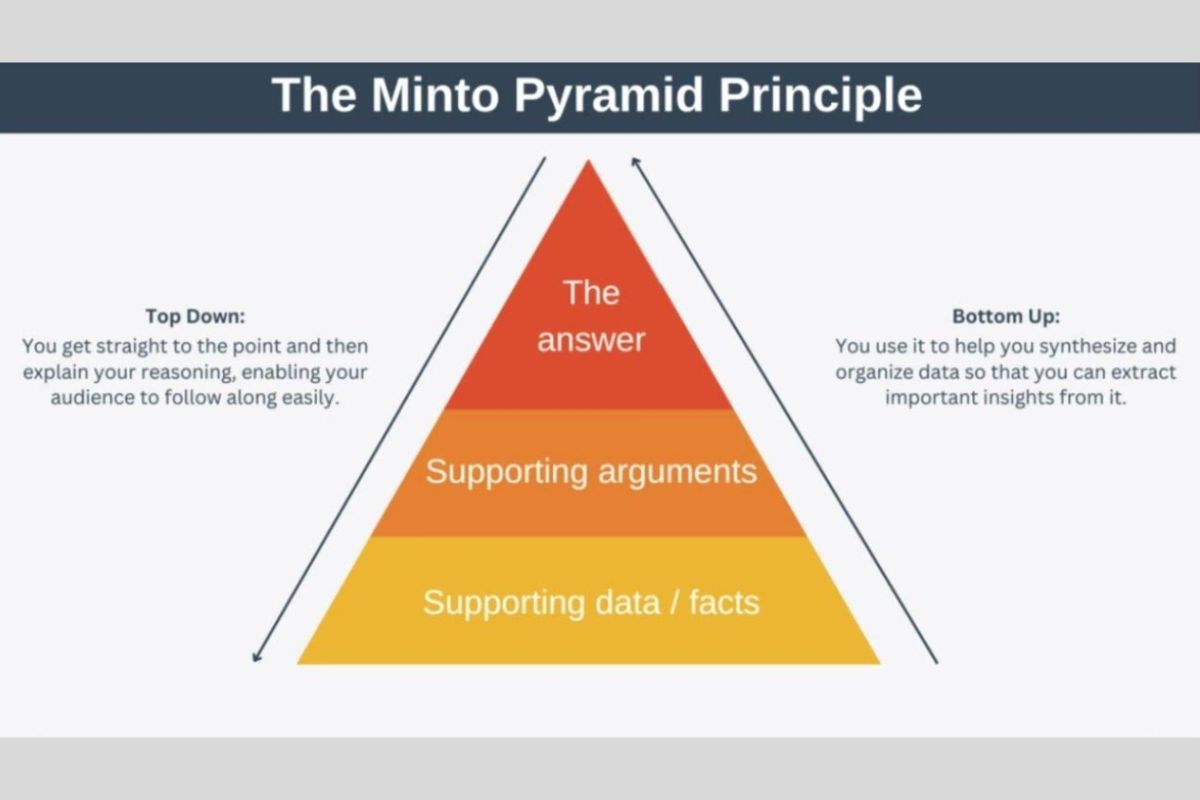
This is vital when communicating complex strategy, especially in C-suite dialogues.
Interview application:
- Open with the core message—the strategic thought or direction
- Follow with three pillars that support the narrative (culture, innovation, sustainability, etc.)
- Add stories, examples, or data to strengthen each pillar
This creates structure and clarity—essential traits of credible leadership.
3. The Pixar Pitch (A Story Arc That Humanizes Leadership)
People remember stories, not statements. This framework turns corporate strategy into a compelling narrative.
Use it to craft origin-to-vision arcs:
- Once upon a time… (the company’s early mission)
- Every day… (the work and purpose)
- Until one day… (a disruption or opportunity)
- Because of that… (response and reinvention)
- Because of that… (momentum and progress)
- Until finally… (the future vision)
This helps leaders appear relatable, visionary, and human.
4. StoryBrand Framework (The Customer as Hero)
Modern leadership narratives work best when they position the stakeholder—not the company—as the hero.
Interview technique:
- Identify the hero (customer, employee, community)
- Define their challenge
- Position the company as the guide
- Explain the plan
- Call to action
- Show the stakes
This framework is perfect for innovation, customer-centricity, or transformation narratives.
5. What → So What → Now What
A simple structure with exceptional clarity.
How to use it in interviews:
- What: State the fact, decision, or initiative
- So What: Explain why it matters to stakeholders
- Now What: Outline next steps and future direction
This is especially effective during crises, transitions, or big announcements.
6. ABT Framework (And → But → Therefore)
A powerful tension-and-resolution structure ideal for persuasion.
Interview use:
- AND: Establish the current reality
- BUT: Introduce the challenge or change
- THEREFORE: Present the strategy, vision, or solution
It creates momentum and makes messages memorable.
How Executive Interviews Strengthen Brand and Leadership Perception?

1. Leaders Become Narrative Storytellers
Interviews let leaders turn vision into narrative. Satya Nadella used leadership conversations to shift Microsoft from a “legacy tech” to a “human-centered innovation” company. His narrative—built interview by interview—changed global perception.
2. Narrative Drives Market Differentiation
In crowded sectors, the executive’s voice becomes the multiplier. A clear innovation narrative or transformation narrative can elevate the company from participant to pioneer.
3. Interviews Become Story Bridges During Change
During uncertainty, audiences look to leaders for meaning and direction. Interviews provide the context and narrative clarity that press releases cannot.
Case Studies: Leaders Who Built Influence Through Narrative-Driven Interviews
Satya Nadella — The Culture Narrative
Nadella didn’t just give interviews—he used them to consistently reinforce Microsoft’s culture shift toward empathy and collaboration. Over time, this became Microsoft’s defining narrative and a strategic asset.
Indra Nooyi — The Purpose Narrative
Nooyi’s leadership conversations were grounded in themes of inclusivity, responsibility, and balance. Her narrative helped reposition PepsiCo as a human-centered, purpose-driven company.
Brian Chesky — The Reinvention Narrative
During the pandemic, Chesky’s transparent interviews on layoffs, losses, and reinvention reframed Airbnb’s story. The narrative he built through media moments restored investor confidence and shaped the company’s path to IPO.
Mary Barra — The Future Mobility Narrative
Barra’s interviews consistently emphasize GM’s long-term EV strategy. Her calm, structured narrative—often following the Pyramid Principle—has been crucial to reshaping GM’s identity in the electric mobility space.
In all four cases, interviews didn’t just communicate strategy—they were the strategy.
The Future: Interviews as Strategic Narrative Engines
As attention spans shrink and stakeholder expectations rise, the leaders who influence will be those who master narrative frameworks and use interviews intentionally.
Leadership narratives will increasingly become:
- more purpose-driven
- more employee-facing
- more interactive and digital
- more rooted in personal philosophy
- more central to brand perception
Executive interviews will remain the most powerful medium for building these narratives, with leadership conversations and C-suite dialogues strengthening and extending them across platforms.
Conclusion
The strength of a modern leader lies not only in the decisions they make but in the narratives they craft. Executive interviews have become the strategic arenas where these narratives are built—where purpose is articulated, culture is shaped, innovation is explained, and vision is made visible.
In an age of transparency and meaning-driven consumption, leadership narrative is leadership itself. And the leaders who master narrative design—through proven storytelling frameworks and intentional communication—will define not just their company’s perception but its future.
Get more such blog on The Enterprise Globe