


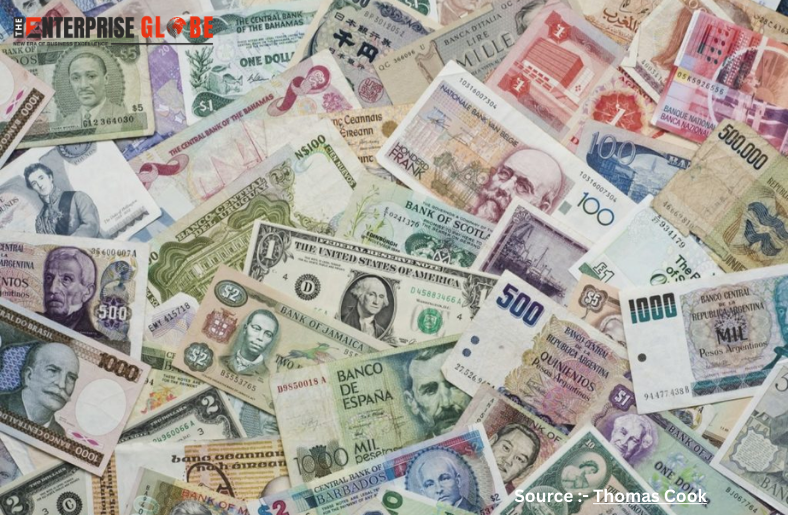
When you look at the global financial map, a few names consistently sit at the top for one reason, their money is incredibly expensive. We aren’t just talking about the biggest economies, but about the currencies that hold massive purchasing power because of huge oil reserves and rock-solid central banks. From the heavyweight Gulf dinars to the historic resilience of the British Pound, these are the currencies that actually dominate the market. Here is a look at the strongest money in the world right now and the specific economic drivers that keep their value so high.
In this article, we will explore the top strong currencies in the world, understand why they hold such high value, and provide a list of currencies that are stronger than the U.S. dollar.
What Does a Strong Currency Mean?
The term strong currency describes a currency whose exchange rate exceeds all other currencies, especially the U.S. dollar. The nominal value of a currency system states that one unit of a currency system must exceed one dollar value threshold to achieve stronger status. The measurement of currency strength extends beyond the evaluation of exchange rates. The strength of a currency depends on various economic factors that determine its value. The economic stability, government policies, inflation rates and global trade partnerships determine currency strength in a country. The countries that possess strong exports and low inflation rates and political stability and sound financial systems will sustain their powerful currency status. Economically stable countries maintain attractive currencies, which create investor confidence and protect their investments.
Top Strong Currencies in the World
Below are some of the strong currencies in the world by value, many of which are stronger than the U.S. dollar.
1. Kuwaiti Dinar (KWD)
The Kuwaiti Dinar (KWD) is widely acknowledged as the most powerful currency throughout the globe. The currency has retained its high value since its introduction in 1960. The economic strength of Kuwait stems from its vast oil reserves and its ability to export them to other countries. Kuwait is one of the world’s leading oil exporters, which generates enormous revenue for the country. The international oil market creates a continuous stream of foreign currency revenue for the economy through its global oil sales. The value of the Kuwaiti dinar experiences an increase from this economic activity. The combination of Kuwait’s small population and its substantial oil export revenue results in economic strength for the country. The country’s financial system achieves both stability and elevated GDP per capita because of this system. The government maintains constant currency value through its monetary policy management which helps to preserve the currency’s value over extended periods.
Approximate Value:
1 KWD ≈ 3.20 USD
2. Bahraini Dinar (BHD)
The Bahraini Dinar (BHD) is another high-value currency in the Middle East because it serves as one of the strongest currencies in the world. The Gulf Rupee was replaced by this currency which became valuable after its introduction in 1965. The Bahraini economy receives major advantages from its oil and gas export activities. The country has developed multiple industries including finance and tourism and banking yet energy exports continue to protect its currency value. The Bahraini dinar exists as a currency which maintains its value against the U.S. dollar through a fixed exchange rate. The system stabilizes currency values while decreasing international trade fluctuations. Investors tend to see Bahrain’s financial system as a reliable and transparent economic environment.
Approximate Value:
1 BHD ≈ 2.65 USD
3. Omani Rial (OMR)
The Omani Rial (OMR) ranks as one of the world’s most powerful currencies. The currency began its use in Oman after it replaced Indian and Gulf rupees during 1973, which resulted in sustained high currency value. Oman’s economy depends on oil exports because they generate significant revenue for the country. The foreign currency gained through these exports strengthens the Omani rial in worldwide exchange markets because it improves the country’s foreign currency reserves. Oman’s government operates a fixed exchange rate system which safeguards the currency from experiencing major value changes. The Omani rial maintains its long-term value because stable political conditions exist together with responsible economic management practices.
Approximate Value:
1 OMR ≈ 2.60 USD
4. Jordanian Dinar (JOD)
Despite having few natural resources, the Jordanian Dinar (JOD) remains one of the world’s most powerful currencies. The currency has maintained a stable value since its introduction in 1950. The dinar maintains its value because the U.S. dollar serves as its fixed exchange rate. The system protects against large market swings while delivering stable conditions for both investors and companies. Jordan also benefits from a well-developed banking sector and strong financial institutions. The international financial backing together with tourism and foreign investment generates economic benefits for the country which strengthens the value of the dinar.
Approximate Value:
1 JOD ≈ 1.41 USD
5. British Pound Sterling (GBP)
The British Pound Sterling (GBP) stands as one of the earliest existing currencies which continues to be used throughout the world. The British Pound Sterling ranks among the top currencies which experience the highest trading volume across global financial markets. The United Kingdom maintains a vast and varied economy which supports its financial and technological and manufacturing and service industries. London serves as a major global financial center which draws investors from all parts of the world. The British pound maintains its strong value because international trade and investment activities create high demand for the currency.
Approximate Value:
1 GBP ≈ 1.25 USD
6. Cayman Islands Dollar (KYD)
The official currency of the Cayman Islands is the Cayman Islands Dollar which uses the abbreviation KYD. The small country possesses a currency which ranks among the world’s strongest currencies. The Cayman Islands has gained international recognition for its offshore banking system and its financial services business. The region’s economy develops through international business and investment activities which create stable economic growth. The country’s economy depends on tourism which brings millions of visitors every year. The economic activities of the Cayman Islands maintain their dollar value through their ongoing operations.
Approximate Value:
1 KYD ≈ 1.20 USD
List of Currencies Stronger Than the U.S. Dollar
Here is a quick overview of some of the strong currencies compared to the U.S. dollar:
| Rank | Currency | Currency Code | Value vs USD |
| 1 | Kuwaiti Dinar | KWD | ~$3.20 |
| 2 | Bahraini Dinar | BHD | ~$2.65 |
| 3 | Omani Rial | OMR | ~$2.60 |
| 4 | Jordanian Dinar | JOD | ~$1.41 |
| 5 | British Pound | GBP | ~$1.25 |
| 6 | Cayman Islands Dollar | KYD | ~$1.20 |
These currencies have a higher nominal value than the U.S. dollar, making them some of the strongest in the world.
Strong Currency vs Global Dominance
It’s easy to get confused here: if a currency is ‘stronger’ than the US dollar, why isn’t it running the world? The truth is that value and dominance are two different things. While a Kuwaiti Dinar might buy you more than a Dollar can, the Dollar is still the world’s ‘lingua franca.’ It’s the currency people actually use to buy oil, settle international debts, and keep as a safety net in central banks. So, while some currencies have a higher ‘sticker price,’ the Dollar remains the king of the playground because everyone, everywhere, is willing to take it.
Conclusion
At the end of the day, looking at the strong currencies in the world is like looking at a global trust report. whereas the high exchange rates of the Kuwaiti Dinar or the Omani Rial might seem like just a fun trivia fact for travelers, but they actually tell a story of incredible economic discipline and massive resource wealth.
The real takeaway? A currency’s “sticker price” is a reflection of a nation’s reputation. Whether it’s the oil-backed muscle of the Gulf states or the “old money” reliability of the British Pound, these heavyweights stay at the top because the world believes in their stability.
As we move through 2026, global markets are shifting faster than ever, and new digital players are entering the field. But for now, the crown still belongs to the nations that can pair high-value exports with rock-solid central banking. So, the next time you see a currency worth three times the dollar, remember—it’s not just a number; it’s a sign of a country playing the long game.
Also Read :- The Enterprise Globe magazine for More information