


For decades, leadership was defined by experience, intuition, and the slow accumulation of wisdom. Decisions were made with partial data, delayed reports, and an unspoken understanding that leadership judgment took time. That world no longer exists.
Today, leaders are surrounded by real-time dashboards, predictive insights, and AI-powered recommendations that promise clarity—but often deliver overwhelm. Data arrives faster than leaders can process it. Teams are divided between those who see artificial intelligence as a career accelerator and those who fear it as an existential threat. And traditional leadership models, built for stability and hierarchy, are struggling to function in an environment that changes daily.
In this new reality, leadership is no longer about having all the answers. It is about making the right decisions—quickly, consistently, and humanely—under conditions of constant uncertainty.
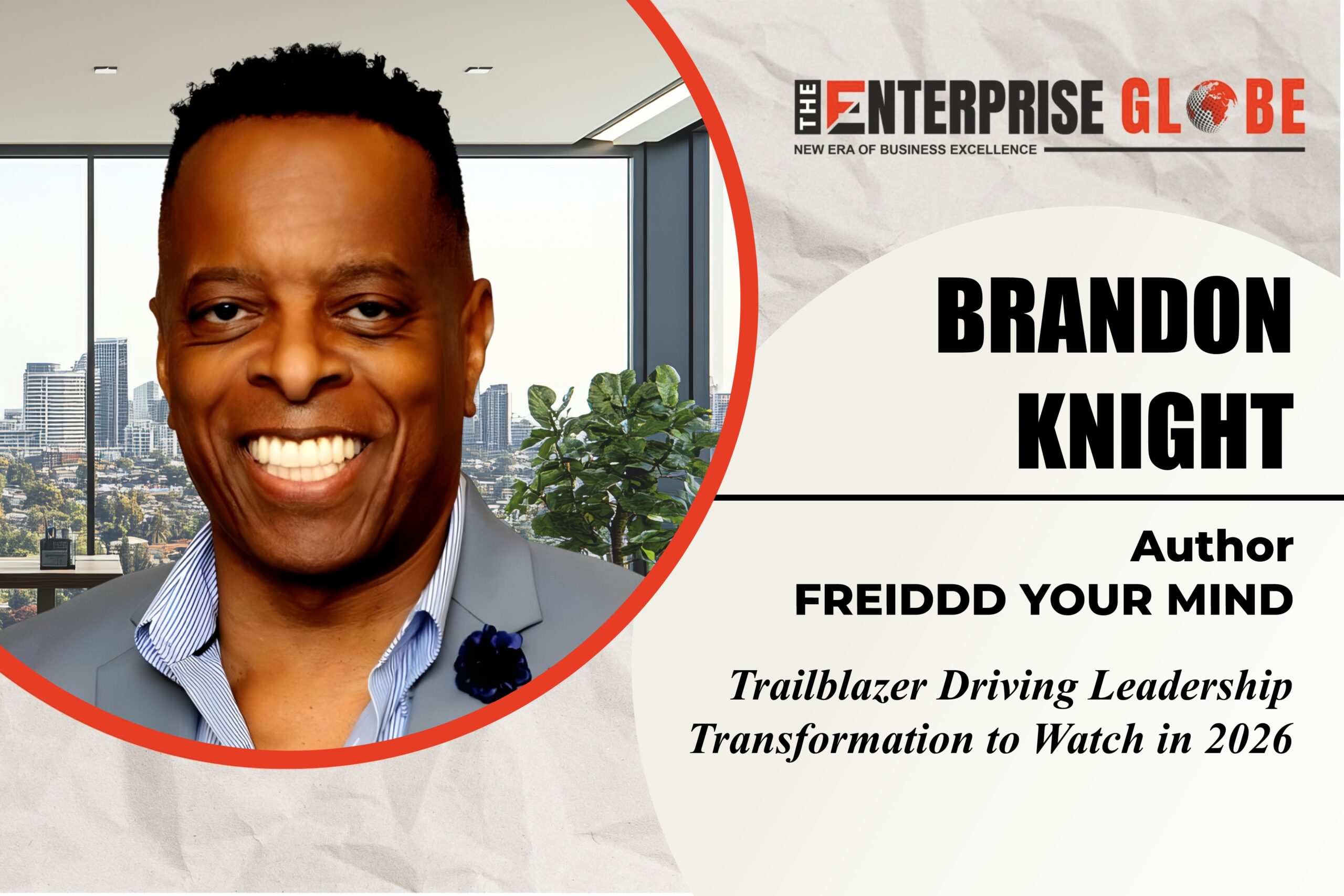
Few people understand this shift better than Brandon Knight With more than two decades spent building and leading large-scale contact center operations across Fortune 1000 organizations, Knight has lived at the intersection of data, people, and performance long before AI became a boardroom obsession. Now, as a senior leader at Zoom and the creator of the FREIDDD Leadership Model, he is addressing what many organizations have overlooked: AI doesn’t eliminate the need for leadership—it fundamentally changes how leadership must work.
FREIDDD—an acronym for Financial Responsibility, Emotional Intelligence, and Data-Driven Decision-making—is not a theory born in a classroom. It is a response to a growing leadership vacuum in the AI era, where access to information has outpaced leaders’ ability to interpret, balance, and act on it. Through a book, a certification, and a decision-support engine designed specifically for leaders, Knight is proposing a recalibration of leadership itself—one where data informs decisions, emotion guides timing, and responsibility anchors every choice.
As organizations race to adopt AI, the question is no longer whether leaders will use artificial intelligence. The real question is whether they will learn to lead with it—before it reshapes leadership without them.
Brandon Knight: Built in the Real World of Leadership
Long before leadership became defined by dashboards, algorithms, and real-time data, Brandon Knight was learning what it truly meant to lead—by making decisions where the impact was immediate and visible. His career did not begin in boardrooms or strategy decks, but in environments where people, performance, and accountability intersected every single day.
“I didn’t come up through theory,” Knight says. “I came up through operations—through managing people, solving problems in real time, and learning very quickly what works and what doesn’t.”
Knight’s professional journey spans more than two decades across some of the most demanding operational environments in business. Early in his career, he managed one of Philadelphia’s largest medical practices, a role that exposed him to the pressures of balancing efficiency, compliance, and human care. From there, he moved into contact center operations, starting at the ground level and progressing rapidly through leadership roles—agent, supervisor, manager, and executive—across outsourced and enterprise environments.
Over the years, Knight helped build and scale contact center operations for major organizations including Sprint, Travelers, and Humana. These were not abstract leadership roles. They required making fast, informed decisions with incomplete data, managing large teams under constant performance scrutiny, and navigating the emotional realities of frontline work.
“You learn very quickly that leadership isn’t about having a style,” Knight explains. “It’s about making the right decision for the situation you’re in—and understanding how that decision affects both the business and the people.”
That operational depth eventually led him into consulting, where Knight advised global brands such as Disney, Mercedes-Benz, and Colgate on customer experience and contact center strategy. Working across industries gave him a broader vantage point—and surfaced a recurring problem. Leaders were being promoted for technical expertise, but rarely trained for decision-making in complex, human systems.
“Too often, people are promoted because they’re great at the work,” he says. “Then suddenly they’re responsible for people, performance, and outcomes—with very little preparation on how to actually lead.”
Today, Knight brings that perspective to his role at Zoom, where he has held multiple leadership positions and now focuses on evangelizing the company’s customer experience and contact center technologies. His role goes beyond product advocacy. It is about helping organizations understand how technology—especially AI—fundamentally changes the way leaders must think, act, and decide.
“I’ve spent my career watching leaders struggle not because they lack intelligence or effort,” Knight reflects, “but because the environment changed faster than their decision-making frameworks.”
It is this combination of lived leadership experience, consulting insight, and technology fluency that defines Brandon Knight’s voice in today’s leadership conversation. His perspective is not theoretical or speculative. It is grounded in decades of real-world decisions—made under pressure, with real consequences—and it is that foundation that would ultimately lead him to rethink what leadership must become in the age of artificial intelligence.
When AI Changes Everything Leadership Once Relied On?
For most of modern business history, leadership evolved at a manageable pace. Experience accumulated over time, data arrived with a delay, and decisions were shaped as much by instinct as by information. Leaders had the luxury of reflection. Artificial intelligence has erased that luxury.
AI has not merely introduced new tools—it has fundamentally altered the conditions under which leaders operate. Data is no longer scarce or slow; it is abundant, immediate, and often overwhelming. Performance metrics update in real time. Predictions arrive before outcomes. And leaders are expected to respond instantly, even as the variables shaping those decisions shift daily.
“What changed wasn’t just the technology,” Brandon Knight explains. “It was the speed, the volume, and the expectations. Leaders are now making decisions in environments that move faster than the leadership models they were trained on.”
Traditional leadership frameworks were built for stability, hierarchy, and linear progression. They assumed that leaders would have time to analyze, deliberate, and then act. AI-driven organizations operate differently. Information flows continuously. Decisions cascade instantly across teams. And the cost of hesitation—missed opportunities, disengaged employees, or eroded trust—has never been higher.
At the same time, AI has introduced a deeply human challenge. Employees are not responding to AI uniformly. Some see it as a tool for growth and empowerment; others experience fear, uncertainty, and anxiety about relevance and job security. Leaders are now responsible not only for interpreting data, but for navigating emotional polarization within their teams—often simultaneously.
“AI doesn’t remove emotion from the workplace,” Knight says. “It amplifies it. And leaders who don’t understand that will struggle, no matter how good the data is.”
What Knight observed across industries was a widening gap. On one side were leaders overwhelmed by data, unsure how to prioritize or act. On the other were leaders leaning too heavily on intuition, disconnected from the insights AI made available. Few were able to balance financial responsibility, human emotion, and data-driven insight in a consistent, repeatable way.
After years of research, reflection, and real-world testing, Knight reached a simple but unsettling conclusion: leadership in the AI era had become indistinguishable from decision-making itself.
“Great leaders don’t have a fixed style,” he notes. “They adapt to the situation. And adaptation today requires a framework—because experience alone isn’t enough anymore.”
That realization became the foundation for FREIDDD—a leadership model designed specifically for the realities AI has created. Rather than replacing human judgment, FREIDDD was built to strengthen it, anchoring decisions in three essential pillars: Financial Responsibility, Emotional Intelligence, and Data-Driven Decision-making. Not as isolated competencies, but as an integrated system leaders can rely on when the stakes are high and the answers are unclear.
FREIDDD did not emerge as a reaction to technology hype. It emerged from a recognition that while AI is changing how work gets done, leadership still rises or falls on the quality of the decisions leaders make—and the trust those decisions create.
In a world where information never stops flowing, FREIDDD offers something leaders increasingly need: a way to decide with clarity, consistency, and humanity.
Inside the FREIDDD Model: How Leaders Decide When Everything Is on the Line
The FREIDDD model was never intended to be a static framework or a philosophical exercise. It was designed to be used in moments when leadership is tested—when data is conflicting, emotions are heightened, and the financial impact of a decision is real.
“At its core, FREIDDD is about how you decide,” Brandon Knight explains. “Not in perfect conditions, but in the messy, real-world situations leaders face every day.”
The model rests on three interconnected pillars: Financial Responsibility, Emotional Intelligence, and Data-Driven Decision-making. While each is essential, FREIDDD challenges the assumption that they should carry equal weight at all times. Instead, the model introduces sequence and context—recognizing that when and how leaders apply each pillar matters as much as what decision they ultimately make.
A Leadership Moment in Real Time
Consider a scenario familiar to many modern leaders. A high-performing employee shows a sudden drop in productivity. The data is clear and immediate—dashboards flag missed targets, quality scores dip, and performance trends turn downward. Traditional leadership models might push for swift corrective action based on metrics alone. FREIDDD asks leaders to slow down—without standing still.
The first lens is Financial Responsibility. The leader assesses the business impact: Is the performance decline affecting customers, revenue, or team outcomes? Is immediate intervention required to protect the organization, or is there room for measured response? This ensures decisions remain grounded in the realities of running a business.
Next comes Emotional Intelligence. Rather than leading with data, the leader evaluates the relationship. When was the last meaningful conversation with this employee? Has trust been established outside of performance reviews? Are there external factors—burnout, personal challenges, shifting expectations—that could explain the change? FREIDDD emphasizes that data shows what is happening; emotional intelligence helps explain why.
“Data tells you the symptom,” Knight says. “Emotional intelligence tells you the cause—and whether now is the right moment to act.”
Only then does the leader fully apply Data-Driven Decision-making. With context established, data becomes a tool for clarity rather than control. Performance metrics are shared transparently, not as accusations, but as a shared reference point. The conversation shifts from judgment to problem-solving—identifying whether the issue is one of skill, which can be coached, or will, which requires a different leadership response.
This sequencing changes everything. The employee is not surprised, cornered, or silently sidelined. They understand the expectations, the evidence, and the path forward. Even difficult outcomes—such as role changes or eventual separation—are no longer abrupt or opaque.
From Individual Decisions to Leadership Systems
What makes FREIDDD scalable is its repeatability. Leaders using the model apply the same decision logic whether they are addressing performance, managing change, approving investments, or navigating conflict. Over time, this consistency builds trust—not only between leaders and employees, but across teams and organizations.
Knight emphasizes that FREIDDD does not remove human judgment. It sharpens it.
“AI gives us more information than ever before,” he says. “FREIDDD gives leaders a way to use that information without losing perspective—or people.”
The model extends beyond individual leaders through a structured ecosystem: a foundational book that shapes mindset, a certification that reinforces disciplined application, and a decision-support engine that allows leaders to test scenarios in real time. Together, they transform FREIDDD from a concept into a daily leadership practice.
In an era where decisions are made faster than ever, FREIDDD offers something increasingly rare—a way to make them better. Not by choosing between data and humanity, but by ensuring neither is ever used in isolation.
The FREIDDD Decision Engine and the Rise of AI-Augmented Leadership
As artificial intelligence reshapes how work is done, one distinction is becoming increasingly clear: the future does not belong to AI-led leadership, but to AI-augmented leadership. The FREIDDD Decision Engine was built with that principle at its core.
Rather than replacing judgment, the Decision Engine acts as a real-time leadership companion—allowing leaders to pressure-test decisions against the FREIDDD pillars before acting. Leaders can input live scenarios, evaluate trade-offs, and receive guidance grounded not in generic AI outputs, but in human leadership experience aligned with Financial Responsibility, Emotional Intelligence, and Data-Driven Decision-making.
“Leaders don’t struggle because they lack intelligence,” Brandon Knight explains. “They struggle because they’re making complex decisions in isolation.” The Decision Engine addresses that isolation by giving leaders immediate access to collective wisdom—without the risk of bias, exposure, or hesitation that often comes with asking for help internally.
What makes the tool especially relevant in the AI era is its timing. Data now arrives instantly, and expectations move just as fast. The FREIDDD Decision Engine helps leaders slow down just enough to decide well—balancing speed with discernment.
More importantly, it reframes AI’s role in leadership. Instead of amplifying control or surveillance, it strengthens clarity, consistency, and confidence. In doing so, the Decision Engine reflects a broader shift underway—one where AI does not replace leaders, but makes them better at the one thing that matters most: deciding well when it matters most.
Reclaiming Leadership in the Age of AI
“I’ve spent most of my career watching leadership evolve—and sometimes struggle to keep up. What I’ve learned is this: leadership has never been about having all the answers. It has always been about making decisions when the answers are incomplete, the pressure is high, and people are depending on you to get it right.
AI didn’t change that truth. It intensified it.
Today, leaders have more data than ever before, but data alone doesn’t create clarity. It doesn’t build trust. And it certainly doesn’t replace responsibility. If anything, AI has made leadership harder—because every decision now happens faster, more visibly, and with greater consequence.
That’s why FREIDDD exists. Not as a reaction to fear, and not as a promise of automation, but as a way to help leaders think more clearly about how they decide. Financial responsibility keeps us grounded in the reality of business. Emotional intelligence reminds us that leadership is human work. Data-driven decisions give us objectivity—but only when used with intention.
I don’t believe AI will replace leaders. I do believe it will expose the gap between those who are prepared to lead in this new environment and those who aren’t. The leaders who succeed will be the ones willing to recalibrate how they think, learn continuously, and invite support instead of operating in isolation.
Leadership in the AI era isn’t about control. It’s about clarity, consistency, and courage. If FREIDDD helps leaders make better decisions—decisions they can stand behind, explain, and own—then it has done exactly what it was meant to do.
The future of leadership is still human. We just have to decide to lead that way.”
Also Read :- The Enterprise Globe Magazine for more information