


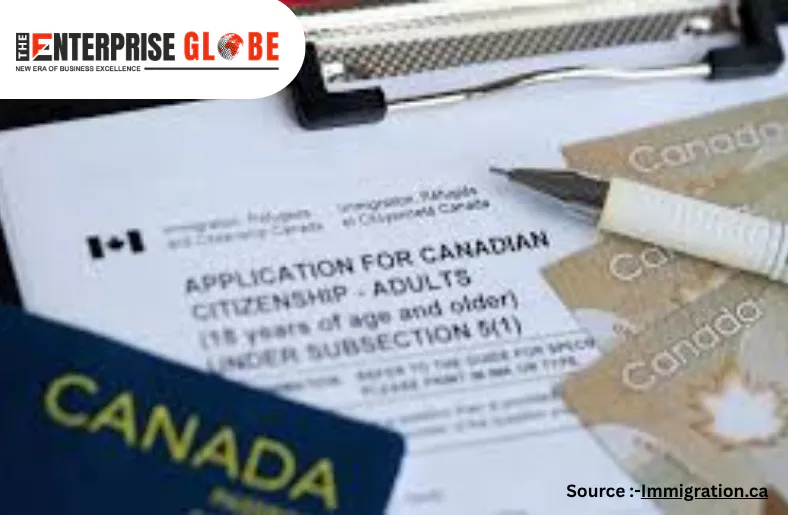
Deciding to pack up your life and start over in Canada is not some casual weekend thought. It’s a massive, high-stakes move. Most people I talk to are doing it for the same reasons, they want stability, a better financial future for their kids, and the kind of freedom that comes with a top-tier passport.
Permanent residency is a huge win, don’t get me wrong. But for most entrepreneurs and professionals, the real goal is canadian citizenship. It’s the difference between being a guest and actually being part of the family. It gives you the right to vote, a seat at the table, and the ability to travel without the constant headache of visa applications.
As in 2026, the path is pretty clear, but don’t expect it to be easy. You should not show up and wait for the clock to run out. In fact, it takes planning, a lot of patience, and a very clear understanding of how the residency rules work over time. The road from landing as a newcomer to taking your oath is paved with specific milestones, here is exactly how to navigate that journey.
Benefits of Canadian Citizenship
Becoming a citizen is a massive upgrade to your legal and professional standing. Here are the most significant advantages for 2026-
1. Full Democratic Rights
The most obvious perk is getting your say at the ballot box. As a citizen, you can vote in federal, provincial, and municipal elections. More importantly for some, you gain the right to run for political office yourself. It’s Canadian Citizenship the shift from being an observer of Canadian policy to being a participant.
2. A Top-Tier Global Passport
The Canadian passport continues to hold its status as one of the world’s most powerful passports according to the current 2026 passport rankings. Canadian Citizenship Gave You now receive visa-free access to 182 destinations across all countries in the world. The business traveler can benefit from this operational asset which eliminates stress and expenses related to emergency visa applications.
3. Total Freedom of Movement
Permanent Residents (PRs) are on a residency clock, Canadian Citizenship have to live in Canada for at least two years out of every five to keep your status. Citizens have no such obligation. Once you have your citizenship, you can move abroad for a decade for a work contract and return to Canada whenever you like without ever worrying about losing your status.
4. High-Level Career Opportunities
Canadian Citizenship people don’t realize that some of the best-paying consulting and government roles require a secret or top-secret security clearance. In 2026, these clearances are almost reserved for Canadian citizens. If you are looking to work in defense, cybersecurity, or high-level federal administration then citizenship is the key that unlocks those doors.
5. Long-term Security for Your Family
Although PRs can technically be deported if they are convicted of a serious crime, citizens cannot. Citizenship provides an absolute safety net. Additionally, if you have children born outside of Canada in the future, they may be eligible for citizenship by descent that will secure your family’s connection to Canada for generations.
Canadian Citizenship vs Permanent Residency
Many people confuse permanent residency with citizenship. Here’s a quick comparison-
| Feature | Permanent Resident | Canadian Citizen |
| Passport | No (Use your home country passport) | Yes (182 visa-free destinations) |
| Voting Rights | No | Yes (Federal, Provincial, Municipal) |
| Residency Clock | 730 days every 5 years | None (Live anywhere in the world) |
| Deportation Risk | Possible (For serious crimes or PR fraud) | Protected (Except for status fraud) |
| Job Access | Limited (No high-level security roles) | Full (Access to all government/defense roles) |
| Status for Kids | Must be sponsored if born abroad | Automatic (Usually passed to next generation) |
How to get the canadian citizenship to live in?
To become a citizen from permanent resident status, individuals must achieve particular achievements. The following details the complete 2026 procedure-
Step 1- Secure Permanent Residency
- The Status- You must have a permanent resident status in Canada which does not have associated conditions (medical or security review).
- 2026 Strategy- The majority of workers choose between Express Entry and Provincial Nominee Program PNP as their main immigration pathways. Your eligibility for citizenship application exists because your PR status remains intact despite your expired PR card but your application requires active PR card status.
Step 2- Accumulate Physical Presence
- The Status- You need to fulfill the physical presence requirement by staying in Canada for three years which equals 1,095 days during the five-year period that leads up to your application date.
- 2026 Strategy- The time you spent in Canada as a student or worker before becoming a PR status can be counted as half days which leads to a maximum 365-day time credit. You must keep precise records of your border crossings because they will serve as proof for your calculation.
Step 3- Complete Tax Filings
- The Status- You need to have submitted your Canadian income tax returns for three different tax years which occur within the five-year period that comes before your application date.
- 2026 Strategy- Since the personal income tax deadline for the 2025 tax year is April 30, 2026, ensure your filings are up-to-date now. Accurate tax records are a primary way the government verifies that you are actually living and contributing in Canada.
Step 4- Prove Language Proficiency
- The Status- All candidates who are 18 to 54 years old need to show their English or French language skills through Canadian Language Benchmark (CLB) assessment at level 4 or higher.
- 2026 Strategy- You can even use the test results of a government-approved test (like CELPIP, IELTS) or your Canadian Secondary school and Post-secondary school diploma.
Step 5- Pass the Citizenship Test
- The Status-The examination consists of 20 questions which test knowledge about Canadian history and its core beliefs and governmental system. The passing requirement for this assessment is a score of 15 correct answers out of 20 total questions.
- 2026 Strategy- The online proctored test became the standard testing method in early 2026 which required students to finish the exam within a 45-minute time limit. You must pass the test within three attempts before you need to attend a citizenship officer hearing.
Step 6- Pay Fees and Submit
- The Status- A complete application includes all supporting documents (passport copies, photos, and ID) along with proof of payment.
- 2026 Strategy- As of March 31, 2026, the total adult fee is $653 CAD. The total includes a processing fee of $530 and a Right of Citizenship fee from the IRCC online portal.
Step 7- Take the Oath of Citizenship
- The Status- This is the final legal requirement. The invitation to the ceremony will be sent to you, which offers both in-person attendance and virtual attendance through video link.
- 2026 Strategy- You can begin your Canadian passport application process when you complete the oath and receive your citizenship certificate. The certificate serves as your primary status documentation, so you should secure it for protection from the time you receive it.
Common Mistakes to Avoid
The IRCC has established its most rigorous standards in 2026. The application process requires complete documentation because even one missing signature or one outdated form will result in application rejection which treats the application as an unfiled document. The following professional shortcomings should be avoided by you-
1. The Date Mismatch Error-
One of the most common reasons files are returned right now is when the date on your physical presence calculator doesn’t match the signature date on your application form. They must be identical.
2. Scanning Selective Pages-
Many applicants only scan stamped passport pages. You must scan every single page, including blank ones and inside covers. In 2026, a single missing page is grounds for an incomplete rejection.
3. Outdated Application Versions-
IRCC updated several forms in early 2026. The application system will reject your PDF file which you saved to your desktop six months ago. You must download a new copy from the portal on your submission day.
4. The 90-Day Signature Rule-
Your application becomes legally invalid after you sign it but wait more than 90 days for mailing or uploading. Your 1,095-day count must be accurate as of the day you sign.
5. Underpaying the New Fee-
Since the fees increased on March 31, 2026, many professionals are still accidentally paying the old $630 rate. If you are even $1 short, the IRCC will not process your file but simply return it.
Tips to Increase Your Chances of Approval
- Keep accurate travel records
- Improve your English or French skills
- Study thoroughly for the citizenship test
- Submit all required documents on time
- Stay updated with immigration rules
Conclusion
Becoming a Canadian citizen is more than just a paperwork exercise; it is a long-term investment in your global mobility and your family’s legacy. In an era where immigration rules are constantly shifting, securing your citizenship is the only way to move from living on a clock to living with total certainty.
The path from PR to taking your oath requires patience and extreme attention to detail, but for the professional who values freedom and security, the reward is well worth the effort. Start tracking your travel today, keep your tax filings clean, and by this time next year, you could be holding one of the most powerful passports in the world.
Also Read :- 10 Most Beautiful Cities in the World You Must Visit at Least Once